
Core Platform
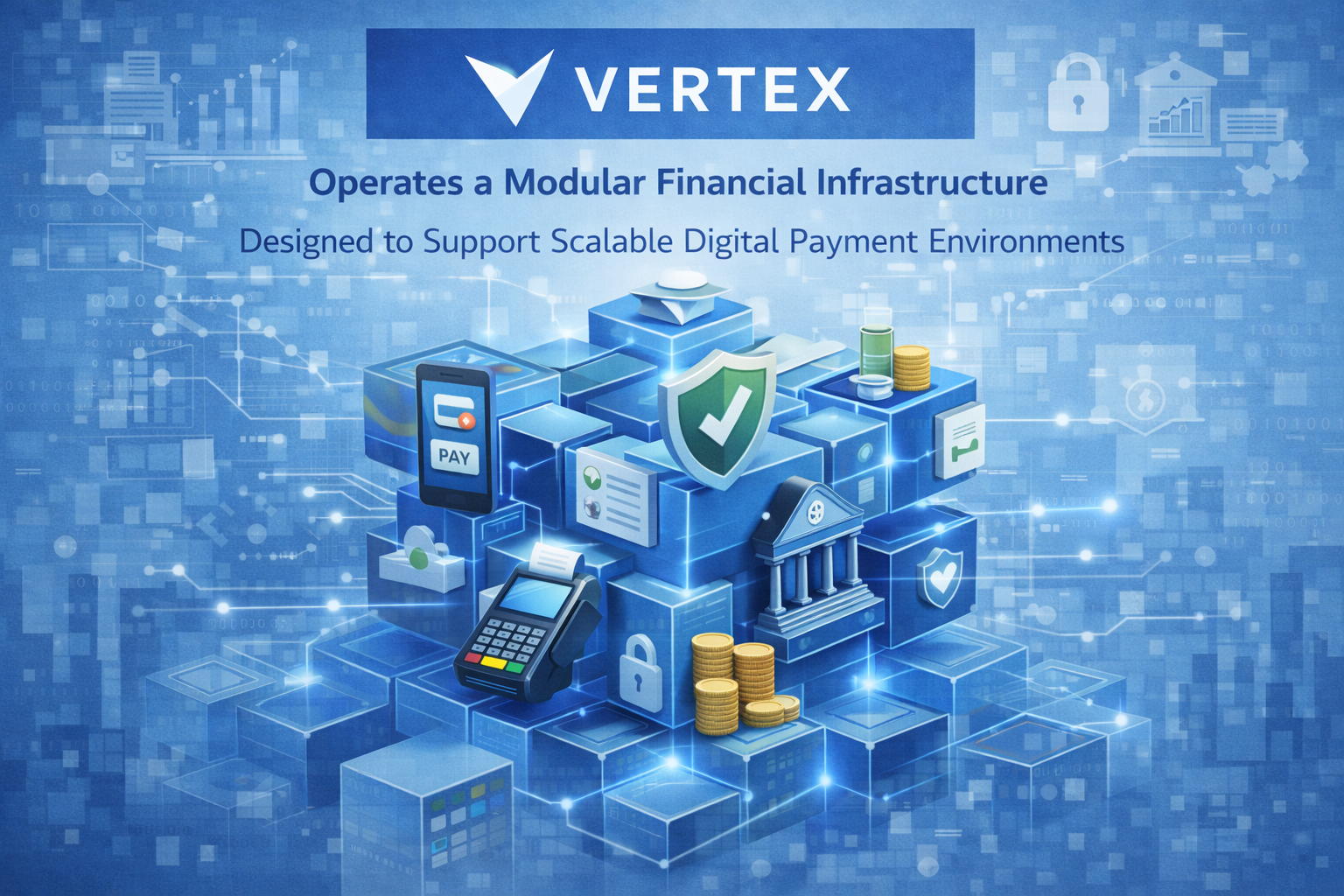
Vertex operates on a modular financial infrastructure integrating payment technologies such as PayPump, CallPay, and Fractal Pay to deliver scalable and reliable transaction processing.
The technology framework integrates with leading payment infrastructure providers and supports secure transaction processing.
Core capabilities include:
- Payment gateway integrations
- API-based transaction systems
- Automated settlement infrastructure
- Financial reconciliation engines
- Transaction monitoring systems
Payment Integration
Purpose-Built South African Fintech Infrastructure
The EPay platform is not a white-labelled or resold product. It is a proprietary fintech system designed, developed, and maintained in South Africa, built specifically for the closed-loop digital wallet, voucher and payment use case.
Platform Core
- Backend – Secure PHP/MySQL application stack hosted on enterprise-grade South African infrastructure. All data is stored locally in compliance with data sovereignty best practices.
- API layer – RESTful API connecting merchants, agents, end users, and the EPay back office in real time. Supports voucher issuance, redemption, wallet transfers, balance enquiries, and transaction history.
- Payment gateway integration – Payment Gateway (card payments, EFT, Ozow/Capitec Pay). PayPump EFT, and ConnecX, giving the platform multiple regulated payment rails for voucher funding and merchant settlement.
- Digital wallet – Closed-loop EPay wallet supporting wallet-to-wallet transfers, NFC wristband payments, voucher issuance, prepaid VAS (airtime, data, electricity), and cash-out via EFT.
- PWA (Progressive Web App) – The merchant and agent facing interface is a mobile-first PWA optimised for entry-level Android devices – purpose built for South African market conditions.
Physical Infrastructure
- Speedpoint terminal – Proprietary ESP32-S3 based POS device with ILI9341 TFT touchscreen, RC522 NFC reader and LiPo battery. Designed for counter and event use. Supports wristband tap payments.
- NFC wristband system – Closed-loop NFC wristband access and payment system designed for festivals, campuses, canteens, and corporate environments. Wristbands are pre-loaded with a wallet value and linked to a verified user profile.
- ZapNet WiFi hotspot infrastructure – MikroTik based captive portal system with freeRADIUS authentication, enabling EPay wallet-funded WiFi access as a revenue stream for venue owners.
Supporting Systems
- Push notifications – VAPID-based web push notification system with service workers and FCM delivery for real-time transaction alerts to merchants and customers.
- Prepaid VAS – Integrated airtime, data bundle, and electricity voucher purchasing directly from the EPay wallet – powered by established South African VAS aggregators.
Risk Control
Pre-funded, Single-Use, Fully Auditable
Risk on the EPay network is controlled at the instrument level, the participant level, and the network level. These three layers work together to make fraud structurally difficult rather that simply detectable after the fact.
Instrument-Level Controls
- Pre-funding only – Every voucher is funded before it is issued. There is no credit extension, no overdraft mechanism, and no way to redeem more value than was loaded. A voucher without funds cannot transact.
- Single-use validation – Each voucher code carries a redemption flag. Once a voucher is redeemed, it is closed. Attempted re-use is rejected at the API level before any funds move.
- Unique identifier per voucher – Every voucher has a cryptographically unique code, an expiry date, and a defined redemption scope. Codes cannot be guessed, reused, or transferred outside the platform without explicit authorisation.
Participant-Level Controls
- Referral-based access – No merchant, agent, or member can join the network anonymously. Every account requires a verified referral from an existing participant. This eliminates the anonymous bad actor – the most common vector for payment fraud on open platforms.
- Agent accountability – Agents are financially accountable for the merchants they introduce. Commission clawback and account suspension mechanisms exist for agents whose merchants generate fraudulent activity.
- Merchant-level transaction limits – Merchants can have transaction floor and ceiling limits applied at the platform level, restricting the value of any single redemption or daily redemption total.
Network-Level Controls
- Real-time transaction monitoring – All transactions are logged and monitored in real-time. Unusual patterns – rapid sequential redemptions, mismatched merchant IDs, anomalous volumes – trigger alerts in the EPay back office.
- Full audit trail – Every transaction on the network is tied to a voucher, a merchant, a terminal or session, and an agent referral chain. There is no anonymous transaction on the EPay platform.
- Multi-gateway redundancy – Payment funding flows through multiple regulated gateways (Payment Gateway, Paypump, ConnecX). If one gateway experiences downtime, voucher funding can continue through an alternative rail without disruption to merchants.
- Closed-loop architecture – Value on the EPay network does not leave the ecosystem without an explicit, verified cash-out request from a KYC-compliant merchant or wallet holder. This contains fraud exposure to the closed-loop.
The combination of pre-funded instruments, referral-based access, and a four-tier accountability chain means that risk on the EPay network is distributed, visible, and human-accountable at ever level – not just algorithmically detected after the fact.
The Vertex technology stack is designed to support secure payment acceptance, reconciliation, and merchant settlement at scale.